Digital transformation is becoming a vital requirement for long-term company growth in today's fast-paced digital economy, not just a luxury for tech giants. Integrating modern digital technologies into every facet of an organization fundamentally alters how companies operate, make strategic decisions, and deliver continuous value to their customers. Adopting a digital-first attitude enables your team to remain competitive, adaptable, and ready for upcoming market changes, regardless of whether you are in charge of a high-growth startup or upgrading a heritage firm.
Table of Contents
1. What Is Digital Transformation and Why Does It Matter?
2. Core Pillars Driving Digital Business Growth
3. Key Strategies for Successful Implementation
4. Frequently Asked Questions (FAQ)
5. Conclusion
1. What Is Digital Transformation and Why Does It Matter?
Moving Beyond IT Upgrades to Cultural Evolution
At its core, digital transformation represents far more than just updating legacy software or purchasing modern hardware. It demands a foundational cultural shift that encourages organizations to challenge traditional workflows, experiment frequently, and become comfortable with iterative change. By replacing manual processes with automated cloud-based infrastructure, businesses eliminate operational bottlenecks, reduce overhead costs, and significantly accelerate their overall time-to-market.
2. Core Pillars Driving Digital Business Growth
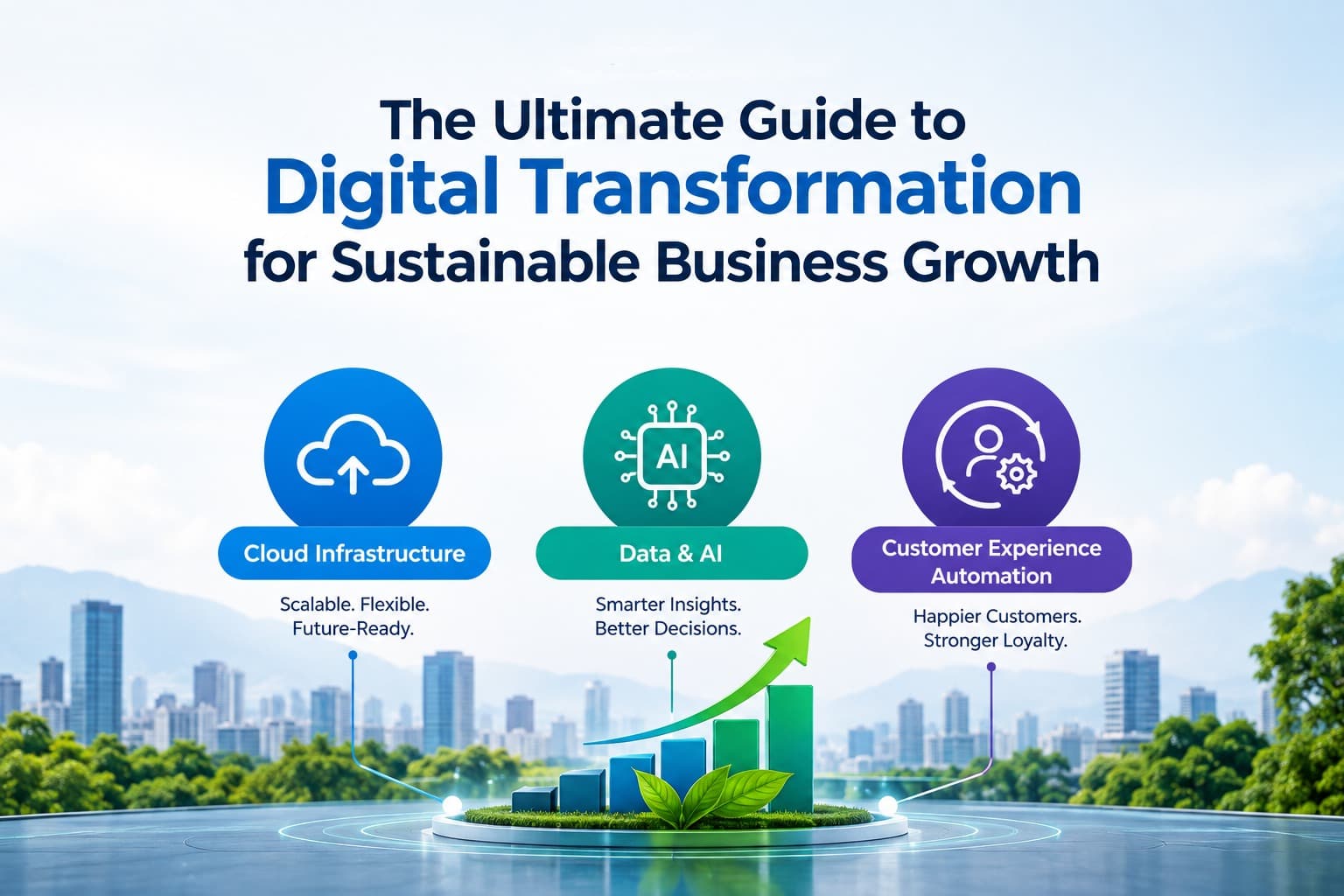
Scalable Cloud Infrastructure: Migrating critical data and operational workloads to cloud platforms enhances organizational agility, robust cybersecurity, and seamless collaboration across remote and hybrid teams while providing on-demand scaling.
Data-Driven Decision Making & AI: Harnessing advanced predictive analytics and artificial intelligence allows leadership teams to uncover actionable insights, eliminate guesswork, and accurately forecast market trends to make proactive business decisions.
Customer Experience Automation: Deploying integrated CRM platforms and omnichannel automated workflows streamlines customer touchpoints, ensures personalized client interactions, and boosts customer retention rates.
Image Suggestion: A sleek modern infographic illustrating an interconnected digital ecosystem—featuring cloud servers, AI analytics dashboards, and mobile devices converging toward an upward growth trendline.
Ready to accelerate your company’s growth journey? Connect with our expert digital strategy team today to schedule a customized consultation and build a digital transformation roadmap tailored specifically to your organizational goals!
Frequently Asked Questions (FAQ)
Q: How long does a full digital transformation initiative take?
Digital transformation is best viewed as an ongoing cultural evolution rather than a one-time project with a fixed endpoint. While foundational technical milestones—such as migrating core databases to the cloud or deploying a new CRM platform—typically take between 3 to 12 months, true transformation requires continuous iteration and adaptation to emerging technologies over the lifetime of the business.
Q: Can small and medium-sized businesses (SMBs) benefit from digital transformation?
Absolutely. In fact, small and medium-sized businesses often execute digital strategies much faster than large enterprises because they possess fewer legacy constraints and bureaucratic layers. By starting with high-impact, targeted modernizations—such as adopting cloud accounting software or automated marketing workflows—SMBs can achieve immediate productivity gains and compete effectively with larger market incumbents.
Conclusion
In an increasingly competitive global marketplace, digital transformation stands out as a proven pathway toward business growth, resilience, and operational efficiency. By systematically aligning modern technological solutions with clear strategic business objectives, fostering a company culture that welcomes continuous innovation, and placing customer needs at the center of your digital strategy, your organization will be exceptionally well-equipped to thrive in the digital era.